Maintaining Optimal Flow with Check Valves in Food Systems
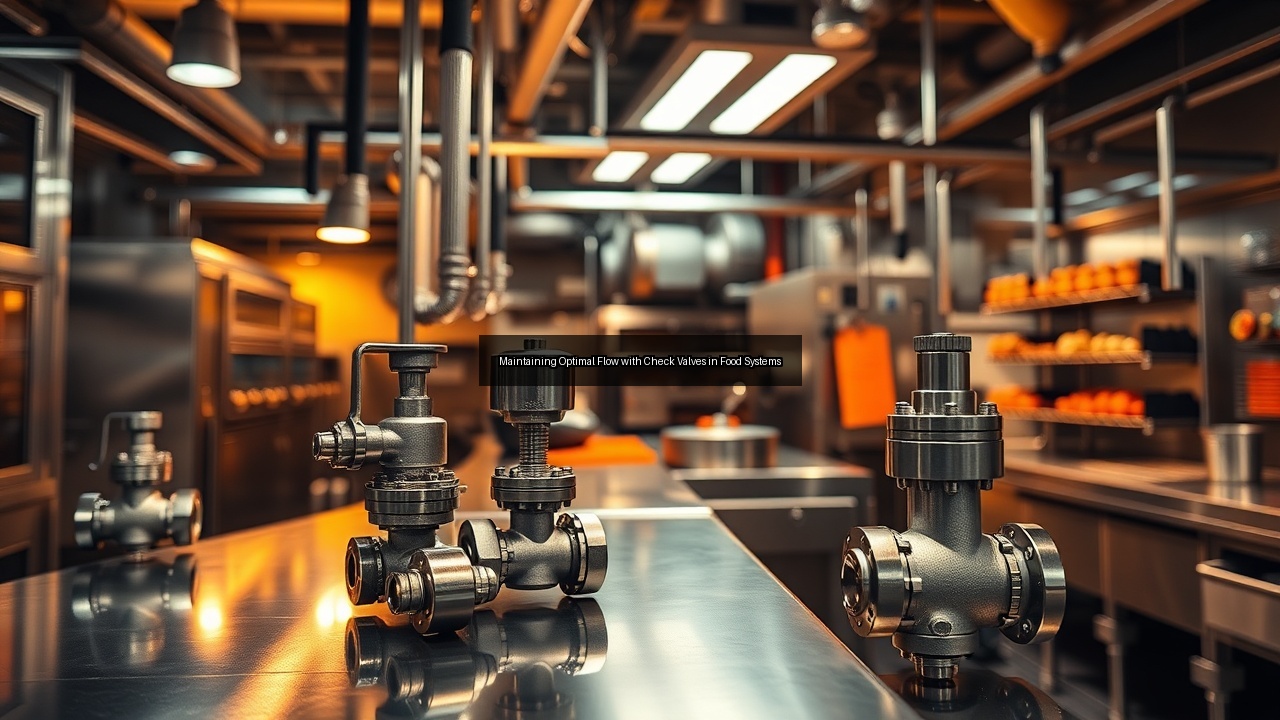
Understanding Check Valves in Food Systems
What are Check Valves?
Check valves serve a critical function in various systems, ensuring that fluids flow in one direction while preventing backflow. In the food processing industry, these valves are essential for maintaining the integrity and safety of food products. By allowing fluid to pass through in a single direction, check valves protect systems from contamination and potential hazards associated with reverse flow. Their design typically includes a movable disk or mechanism that opens under pressure and closes when the pressure drops, creating a reliable barrier against backflow. This function is particularly crucial in food and beverage applications, where maintaining product quality and safety is paramount.
Role of Check Valves in Food Processing
In food processing, check valves play a pivotal role in maintaining optimal flow and preventing contamination. These valves are commonly found in systems that transport liquids, such as sauces, juices, and dairy products. Their primary function is to ensure that fluids do not flow backward, which can introduce foreign contaminants and compromise product safety. In addition, check valves help maintain pressure within the system, allowing for efficient operation. This is vital in large-scale food production facilities, where consistent flow rates and pressure levels are necessary to meet production demands and regulatory standards.
Types of Check Valves Used in the Food Industry
The food processing industry employs several types of check valves, each designed to meet specific operational needs. Swing check valves, for instance, use a hinged disc to allow flow in one direction and close under reverse pressure. They are suitable for applications with larger pipe sizes and where space allows for a swing mechanism. Another common type is the spring-loaded check valve, which uses a spring to keep the valve closed until fluid pressure opens it. This design is often used in smaller pipelines and helps maintain a tight seal. Additionally, diaphragm check valves provide excellent sealing capabilities food processing valves and are ideal for handling viscous fluids or products that require a high level of hygiene. Selecting the appropriate type of check valve ensures efficient operation and compliance with industry regulations.
Importance of Valves in Food and Beverage Applications
Sanitary Design and FDA Compliance
Sanitary design is a non-negotiable requirement in the food and beverage industry. Valves, including check valves, must comply with stringent FDA regulations to ensure food safety and prevent contamination. Manufacturers design sanitary valves with smooth surfaces and minimal crevices to prevent bacteria buildup. Materials such as stainless steel are commonly used due to their corrosion resistance and ease of cleaning. By adhering to these sanitary design principles, food processing facilities can maintain high hygiene standards, which is crucial for consumer health and brand reputation. Regular audits and compliance checks further ensure that all valves, including check valves, meet the necessary safety and sanitary requirements.
Control Valves and Their Functions
Control valves play a vital role in the food processing industry, regulating fluid flow based on specific parameters. While check valves prevent backflow, control valves manage the flow rate and pressure in a system, allowing for precise control of production processes. In applications where varying flow rates are necessary, food processing valves such as mixing ingredients or adjusting temperatures, control valves work in tandem with check valves to ensure a seamless operation. This combination enhances overall system efficiency, reduces waste, and improves product quality. Implementing both types of valves optimizes food processing operations and ensures compliance with industry standards.
Ball Valves vs. Check Valves in Food Systems
Ball valves and check valves serve different but complementary functions in food processing systems. Ball valves feature a spherical disc that provides excellent sealing capabilities and allows for quick shut-off. They are ideal for applications requiring frequent on/off control. In contrast, check valves focus solely on preventing backflow, offering a fail-safe mechanism that protects product integrity. When deciding between these two types of valves, food processors must consider the specific application and operational requirements. Integrating both ball and check valves within a system can lead to improved efficiency, enhanced control, and greater safety in food processing operations.
Optimizing Flow with Check Valves
How Check Valves Ensure Fluid Safety
Fluid safety is paramount in the food processing industry, where any contamination can lead to serious health risks. Check valves play a significant role in ensuring the safety of fluids by preventing backflow, which could introduce contaminants from downstream processes. By maintaining a one-way flow, these valves help protect sensitive ingredients and finished products from exposure to harmful bacteria and foreign substances. Additionally, many check valves are designed to withstand high pressures and temperatures, further enhancing their reliability in demanding environments. Implementing check valves as part of a comprehensive safety strategy is essential for food manufacturers aiming to uphold quality and safety standards.
Integration with Automated Systems
Automated systems streamline food processing operations, improving efficiency and consistency. Check valves integrate seamlessly into these automated systems, providing reliable fluid control without the need for manual intervention. Their ability to operate independently allows for continuous flow, ensuring that production lines run smoothly. Modern automated setups often utilize sensors and control systems to monitor fluid flow and pressure, allowing for real-time adjustments. This integration not only enhances operational efficiency but also reduces the risk of human error. As the food processing industry continues to embrace automation, the role of check valves in maintaining optimal flow becomes increasingly vital.
Applications in Baked Goods and Confectionery
Check valves find numerous applications in the production of baked goods and confectionery products. In these sectors, precise control of fluid flow is essential for achieving the desired texture and flavor. For example, during the mixing of ingredients for dough or batter, check valves ensure consistent flow without the risk of backflow, which could alter the recipe or introduce contaminants. In confectionery production, check valves help manage liquid chocolate and syrup flows, safeguarding product quality and consistency. By utilizing check valves, manufacturers can enhance their production processes, ensuring that each batch meets the highest quality standards.
Resources and Best Practices for Valve Selection
Choosing the Right Valve for Specific Applications
Selecting the appropriate valve for food processing applications requires careful consideration of various factors, including fluid type, pressure, and temperature. Food processors should assess the specific requirements of their systems to choose valves that meet operational demands. Resources such as industry guidelines, manufacturer specifications, and consultation with valve experts can provide valuable insights. Additionally, understanding the differences between valve types, such as check valves, ball valves, and control valves, allows for informed decision-making. A well-chosen valve enhances system efficiency, reduces maintenance costs, and ensures compliance with safety standards.
Maintaining Valves for Longevity and Safety
Proper maintenance of valves is crucial for ensuring their longevity and safety in food processing applications. Regular inspections help identify potential issues such as wear and tear, leaks, or corrosion. Cleaning valves according to manufacturer guidelines prevents buildup of food residues, which can compromise hygiene and operational efficiency. Implementing a scheduled maintenance program allows for timely repairs and replacements, minimizing downtime and ensuring continuous production. Training staff on valve maintenance best practices further enhances safety and operational efficiency. By prioritizing valve upkeep, food processors can extend the lifespan of their equipment and maintain high standards of safety.
Future Trends in Food Processing Valves
The food processing industry is witnessing evolving trends in valve technology aimed at enhancing efficiency and safety. Innovations such as smart valves equipped with IoT capabilities allow for real-time monitoring and data collection, enabling more precise control over fluid dynamics in processing systems. Additionally, advancements in materials science are leading to the development of more durable and corrosion-resistant valves, which are critical in high-demand environments. As the industry continues to focus on sustainability, manufacturers are exploring eco-friendly materials food processing valves for valve production. Staying informed about these trends equips food processors to make strategic decisions that enhance productivity and compliance.